Valor of the Healer

A Valor of the Healer review!

I spotted this first on Goodreads, then confirmed the link via Google Alerts: the Demon Librarian has put up a loverly four-star review of Valor of the Healer!

This makes the first official review I’ve seen posted on a standalone site (as opposed to on Amazon or Goodreads). And there’s some good commentary there, including about the cover. (The reviewer is right, the character portrayed on Valor‘s cover is actually quite a bit more badass-looking than the Faanshi in the Valor of the Healer Movie In My Brain. I reconcile this by thinking of cover!Faanshi as how she might eventually look in another five or ten years!)

And now, I am Anna’s Vague Startlement That People She Does Not Actually Personally Know Are In Fact Reading and Reviewing Her Work!

The Valor of the Healer page has been updated to include this review link, and while I’m at it, I also spotted that there’s a page up for Valor now on LibraryThing. So if any of y’all out there are users of that site, there you go!

Quebecois Music

Album review: Enregistré Live, by Genticorum

And because I’ve managed to go more than five minutes around here without talking about Quebecois music, let’s correct that little problem, shall we? Because my boys of Genticorum have just put out a shiny brand new album, and if you have any interest in Quebecois trad whatsoever…. actually, chances are you already know about this album and you probably even heard about it before I did! But that said, if you’re one of my readers and you’ve seen me enthusing over Quebec trad and you want to check it out for the first time, you could do a hell of a lot worse than picking up Enregistré Live.

When it comes to Quebec trad, okay yeah, I gravitate to the powerhouse bands. Give me Le Vent du Nord and their hurdy-gurdy goodness, or La Bottine Souriante and the sheer unmitigated awesome of their entire horn section. Or the Charbonniers, who pull off the impressive feat of matching La Bottine in power with nothing more than five voices and ten feet. Genticorum is subtler and more deft than these groups in some ways, though, and not just because a flute being one of their primary instruments contributes a certain delicacy of style. This manifests as well in the swift, light podorythmie from fiddler Pascal Gemme, the nimble guitar from Yann Falquet, and the delivery of their vocals.

Did I mention this is Genticorum’s first live album? Since I’ve had the distinct pleasure of seeing them in concert, I was particularly excited about picking this album up. I wanted to see if it captured the energy of the concert I’d previously experienced, and I wasn’t disappointed in the slightest. The between-song intros are minimal, so if you don’t speak French, or if you have enough to follow song lyrics but not stage intros, there won’t be much to interrupt the music for you. (For me, though, I also quite enjoy trying to figure out what the boys are saying about the songs–it’s an excellent way to practice French if, like me, you’re learning!)

Because of course, the songs are the point of the album. There are a couple of tracks here that were familiar to me from the studio albums I’d bought, like the dextrous “La brunante”, where Alexandre de Groisbois-Garand shines on his flute. And the big closer, “La chasse”, is one of my repeat play tracks from their very first album; this is a particularly awesome one since the boys are in high form, and they get the audience going too. The very last track, presumably an encore, was also familiar to me–but because I’d encountered it before on a Galant, Tu Perds Ton Temps album! “La valse turluttée” worked very well by the Galant girls as a complex a capella piece, but it works splendidly here with Alexandre’s flute too.

Of the tracks I didn’t recognize going in, I particularly liked “La finno-gaspésienne”, another deft instrumental; “Déline”, featuring lovely vocals, and especially “La rouillette”, another vocal number, but one which gives each of the boys a chance to sing lead (and Pascal to delightfully milk the hell out of his turn), and which has fun overall structure as a song. (And you can find this one on YouTube! Clickie!)

The album’s not released in the States yet, so right now your options I’m aware of for getting your hands on it are Amazon US, Amazon CA, Archambault in Quebec, Reynaud-Bray in Quebec, and the Canada iTunes store.

But I’d strongly encourage you to keep an eye out on their website for further updates! Or follow them on Twitter or on Facebook. And tell them Anna sent you!

ETA: Bonjour, all you Genticorum fans! Gracious, a lot of you have found this post.

Publishing

SFWA brouhaha followup

As the SFWA controversy still rumbles around the Net in various writing circles, I’ve seen the topic come up of whether, if SFWA is inaccessible and/or irrelevant to a lot of today’s working writers, is it time to fire up a competing organization? That very question has been raised to me in comments, and I’ve seen it raised on at least two other blog posts. Like Cora Buhlert’s Revenge of the Girl Cooties post, as well as the World SF blog, which is asking whether SFWA can continue to be relevant in an increasingly global writing market.

Over on her own blog, Dara has now addressed the question of, if a competing organization were to arise, what would that actually mean? Picosummary: a lot more work than many might think. I encourage you to go give her a read.

I’ve also seen people suggesting that perhaps SFWA should follow the example of RWA and admit members who aren’t published writers yet. I think it’s certainly an idea worth considering. Though me, I’d be just as interested in seeing them open up a tier of membership allowing members who have sold to professional markets–even if they aren’t advance-paying markets.

Now, I get it. I get that a publisher who actually pays you an advance is still going to be the most Serious Business thing you can do for your career if you’re a writer. But the problem is, that still pretty much means “a publisher who can get you into print”, because I have yet to hear of any serious digital-only markets that will pay advances. (If such markets exist, I’d love to hear about them!)

And as the number of aspiring writers continues to rise, the advance-paying markets, the ones who can in fact get you into print, become harder and harder to sell to. I’ve personally experienced an advance-paying market telling me I had a good novel–but they didn’t want it because they had no room in the schedule for it, and they were sure some other market would take it. (And I had to wait well over a year to get that response.) Fewer and fewer advance-paying markets are taking unsolicited submissions, just because it’s become so easy to submit a novel to markets these days that they’re drowning in tidal waves of slush. They have to lock down their submissions queues if they want to get any work done at all.

Which of course means that aspiring writers have to then court agents instead, if they want to get to those otherwise inaccessible advance-paying markets. But this doesn’t solve the problem, because the agents that are taking unsolicited submissions are also drowning in slush. An author still has to wait, often upwards of many months, before an agent may get back to them. And that’s assuming the agent doesn’t have a policy of “if you never hear from me, that means no”.

Given all these things, I cannot be surprised in the slightest that many writers who tell absolutely lovely stories are turning to digital markets instead. I’ve read quite a few of them from Carina now. I’ve gone this route myself, of course, and y’know what? I’ve never had anything less than a professional experience working with the team at Carina. I will say with pride that Valor of the Healer is an infinitely better book because of the editing it received from Deb Nemeth, my editor.

And yet. Because I sold to a digital market, one that didn’t pay me an advance, I’m still not eligible for SFWA.

I may eventually be. I do have an agent, and once I have my trilogy with Carina out of the way I do plan to have her shop my other forthcoming works around to hopefully higher-profile markets. But realistically speaking, at best it’ll probably be four or five more years before I could make the necessary sales. And by then I’ll have at least five digital novels out–Faerie Blood, Bone Walker, and the entire Rebels of Adalonia trilogy. I’ll also have novellas in the Warder universe, which I will be putting up for public sale as soon as I finish them and get them to my long-patient Kickstarter backers. And I have every expectation that as I continue to work with Carina as well as on my independently published works, my craft will improve and I will grow as a writer.

Yet not a single one of these words will make me eligible for SFWA. And I have to admit, if a competing organization that could pull off the same level of professional competence arose, one which would accept digital, independent, or hybrid authors, I’d be looking very seriously at joining it. I will in fact be looking very seriously at the Northwest Independent Writers Association, though so far their scope is limited to the Pacific Northwest and I’d like to see something more national, if not global.

But it sure would be nice if SFWA would consider opening up an auxiliary tier of membership for those of us who have sold to professional digital markets with good track records of paying their authors. I’d absolutely pay dues for that.

Until then, I’ll be over here working on my books.

Advice on Self-Publishing

Advice on self-publishing, part 4: Cover art

This being part 4 of my ongoing series on self-publishing. Previous posts are:

Part 1: Write the book | Part 2: Beta reading and editing | Part 3: Turning your manuscript into an ebook

This post’s going to be all about cover art. And the long and short of it, in my experience, is that yes. You need some. Maybe simpler cover art than you might otherwise need if you’re going digital-only in your self-publishing efforts, but even then, your cover art will matter. Bad cover art will get you pointed and laughed at. With often particularly high-profile results.

Even if people are going to buy you digitally, they’re still going to need to be attracted by a striking piece of cover art–even if it’s something simple that looks good in thumbnail form. Especially if it’s something simple that looks good in thumbnail form. (This is, I suspect, a contributing factor to why so many covers on so many novels in most of the genres I read these days are no more complex than a portrait of one or two characters. Those things shrink down real well to thumbnail size.) That thumbnail’s going to matter if somebody’s browsing their ebook site of choice looking for something new to read, whether that site be Amazon, B&N, Kobo, Goodreads, or whatever.

The larger form of your cover art is also going to matter. Depending on what device people use to read their ebooks, that art’s going to represent your book in a variety of ways for them. It’ll serve as the thumbnail when people browse their libraries in any of the many available desktop-based programs or device-based apps for reading ebooks and managing ebook libraries. And in just about all cases, it’ll still be the first thing somebody sees when they open up your ebook. You won’t need to worry as much on an e-ink device, where your art will be black and white. But on a retina-capable device, like any of the later iPhones or iPads, your art’s definitely going to need to look as good as possible.

Sure, yes, “as good as possible” is going to be a subjective concept. But I’ve found that if you’re going to self-pub, and if you want to be taken as seriously as people who professionally publish via the traditional routes, then you’re going to have to work as hard as the traditional publishers do to make a book present itself well to potential buyers. To be blunt, this means you need cover art that doesn’t look like Photoshop threw up all over your manuscript.

If you’ve got the graphic design experience to generate your own cover art, by all means, go for it. But if you don’t have that experience, and you don’t already know what all designing a good cover entails, think about it a minute. You need to think about the central image of the art, but also your font choices–for your title, for your name, and for any other text you might want to present on the cover, like a blurb quote. You need to think about font placement and kerning. Color choices, too, so that the colors of your text go well with the art itself. And again, you’ll want to think about all of these things in conjunction with how well that cover’s going to look on websites where people are browsing for something to buy, and how it’ll look on their computers and devices once they have the book.

If you don’t have that graphic design experience, I strongly urge you to find somebody who does. If you have friends with the necessary skillsets, recruit them–but don’t forget to compensate them for their efforts, via whatever means you might work out as appropriate between you. If you need to, however, find and pay a professional.

When I decided to re-publish Faerie Blood on my own, one of the first things I decided to do was commission new cover art for it and for the forthcoming sequel, Bone Walker. I don’t have graphic design experience, but I’m blessed to have a spouse who does, which is the first half of why Faerie Blood‘s cover came out looking awesome if I do say so myself.
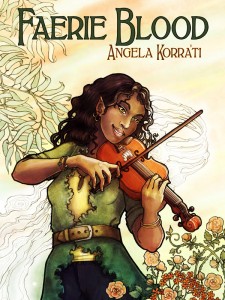
Faerie Blood Second Edition Cover

Faerie Blood Second Edition Cover

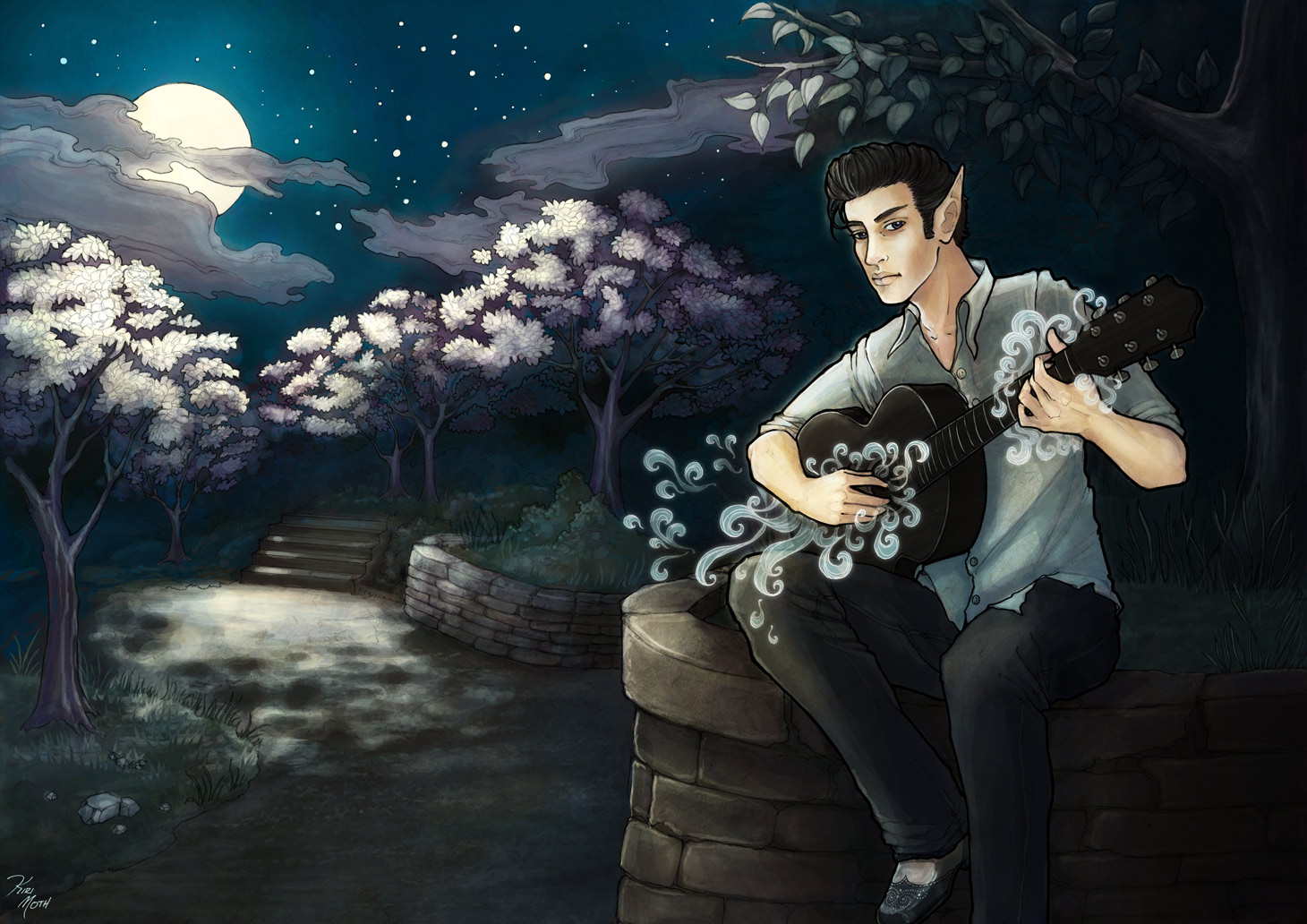
The second half of why the cover works is, of course, because I commissioned the awesome Kiri Moth to do the art for me. And no, she wasn’t cheap. Paying Kiri for her work is a huge chunk of where the funds from my Kickstarter last year have gone. But since she’s throwing me awesome pieces like the newly finished Bone Walker cover, I’m finding her worth every damned penny.
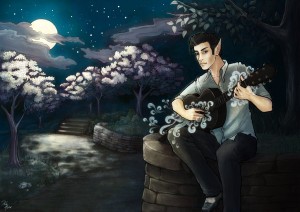
Unseelie Bard by Night

Unseelie Bard by Night

Now, yeah, I did have a successful Kickstarter. Not every indie author is going to be able to say that, and many of you out there are going to have a lot of trouble budgeting for the funds necessary to pay for art that doesn’t suck. I would encourage you nonetheless to budget what you can. If you’re fortunate enough to find a cover artist you’d like to work with, talk to that person, explain your goals, ask them their rates, and see if you can work something out. Above all, treat it like a professional transaction, because that’s exactly what it is. Whoever you commission to do cover art for you is going to be contributing to your professional presentation of your book, and they should be respected accordingly and duly paid for their work.

Where do you find these potential cover artists? I lucked out pretty fast finding Kiri; all I had to do was put out a call over my blog/journal posts, asking for recommendations. That’s where I’d suggest you start: utilize what social networks you may be on, and outright ask people. If no one you regularly talk to comes up with immediate suggestions, start hunting through DeviantArt or Tumblr. If you’re in a fandom that’s got a heavy fanart presence, talk to your fellow fans. Ask other indie authors who did their art and if they have contact data for those artists. And if all else fails, what books do you own that have art you really love? Look in those books, find what the author said in the Acknowledgements or Author’s Notes, and see if he or she credited the artist.

Once you do find an artist and nail down the agreement of what he or she will create for you and how much you’ll be paying, don’t overlook the technical details that’ll need to be decided as well. Especially if you’re also planning to publish in print, which will expand the scope of what you’ll have to think about considerably. What size book will you be aiming for? Mass market size, trade, or something in between? Will you want wraparound cover art, or will the back of the book just be laid out with the blurb and other necessary text?

I’ll cover those details in more depth in coming posts, but for now I’ll just boil it down to this: you’ll need to think about more than just what the art looks like, and you’ll need to communicate about that with your artist.

When you finally get your finished art, what happens then? If you read Part 3 of this series of posts, you’ll have seen me mention Guido Henkel’s excellent tutorial on how to build an ebook, and that’ll have included putting your cover art in there.

And if you have a completed ebook, with cover art and layout and design the way you want it, you should be ready to put that thing up for sale. I’ll talk about that in Part 5, soon to come!

Publishing

Latest brouhaha involving SFWA

One of the drawbacks about being non-traditionally published is that so far I’m not eligible to join writers’ organizations in the genres I write in. Even though I have two books out, the fact that one of them is published via a digital publisher and the other is self-pubbed (both digitally and in print) means I’m not eligible to join SFWA, the Science Fiction Writers of America.

This, for the longest time, was one of the things you needed to accomplish if you wanted to be taken seriously as an SF/F author. It’s still one of the things you need to accomplish if you want to be eligible for the Nebulas. (ETA: Noting from comments below that while you don’t have to be in SFWA to be nominated for the Nebulas, you do if you want to vote.) And while SFWA membership isn’t necessary to get you nominated for the Hugos, the underlying criteria for said membership are still pertinent there too–i.e., you have to be published via qualifying markets. Which still means, at least if you’re a novelist, markets that can get you into print and in bookstores.

Please don’t get me wrong. I love having books out there available for the digitally-inclined to read. But there’s still a part of me that feels like I’m still a fifth-tier citizen in Writerland, just because I can’t say “here is this organization of Writers Who Know What They’re Doing who have agreed that why yes, I am in fact One of Them”.

And then I hear about things like the latest blowup involving SFWA and I wonder if this is really a goal I want to accomplish after all.

In the latest issue of the SFWA Bulletin, they published a piece by Jim Hines. Those of you who know of Jim know he writes excellent fantasy novels, that he’s a staunch anti-rape advocate, and that he’s been relentlessly skewering the inherent ridiculousness of how female characters are portrayed in SF/F cover art when compared to their male counterparts. Jim’s piece goes into said cover art and the radical notion that women are people–pretty much the words he used, in fact. In a genre where too damned many people are still whinging about “fake geek girls” (a notion guaranteed to raise my blood pressure), Jim’s voice is all too necessary. Especially when women saying the exact same things sadly do not get nearly the same attention as men.

The problem is, the same issue also published a rebuttal by Mike Resnick and Barry Malzberg. And from everything I’m seeing posted on the topic, their rebuttal was horribly sexist and essentially boils down to “nobody called us on our sexist bullshit back in the glory days of the 70’s, so why are people doing it now? OHNOEZ CENSORSHIP!”

Jim’s got a link roundup post on the matter right over here, so I’m not going to go into too much depth on quoting Resnick and Malzberg. Many others already have, and again, I’d like to keep my blood pressure down, thanks. (Though I will note Foz Meadows has an excellent post on the topic, and so does Kameron Hurley.)

As for me, I’m standing back looking at this and I’m thinking, “And this is the organization I have to eventually join if I want to be taken seriously as an SF/F writer?”

I swear, people, it makes me wish I actually were more of a romance writer rather than someone who writes SF/F with a side helping of romance. For one thing, the simple fact that I’m a woman and that I put any love story at all into my plots will get me labelled as a “romance writer” by the same sort of cloud-yelling, cane-shaking, rampaging sexists that can’t deal with the notion of girl cooties all over their precious rocketship stories. For another thing, I’m also sick of the sneering condescension far too much of the SF/F world levels at the romance world in general. Because I don’t know about the rest of you, but I got enough shit for my reading choices when I was a kid that I know exactly how it feels, and I’m not going to turn around and level that kind of garbage at somebody else who might happen to be reading a genre I don’t like. This is exactly why you won’t even see me sniping on people for reading Twilight or Fifty Shades of Grey or whatever.

I’ve got my share of issues with the romance genre, sure. I can’t read most contemporary romance because it’s way, way too heteronormative for me, and more often than not the gender roles and expectations in play set my teeth on edge. And because I am at heart an SF/F reader, I tend to get really bored really fast if a novel’s only focusing on the development of a relationship. I need more going on than that. Give me a fun rollicking historical with spies, or the Napoleonic era. Or something with magical or paranormal elements, like Zoe Archer’s excellent Blades of the Rose books.

But you know what I won’t find in the romance genre? People in positions of power, people who’ve been in the field long enough to have respected names and who should in theory have the experience to know better, telling me how cute I am for trying to write my little novels. Which they then promptly dismiss anyway.

I’m heartened that there’s been a big outcry in response to Resnick’s and Malzberg’s cane-shaking bullshit. But I wish it wasn’t necessary.

ETA: Dara has a few words to say on this topic too, right over here, on the general theme of Gosh This All Looks Familiar.

Son of ETA: Holy hopping gods, a lot of you are coming in to read this post. Hi, visitors! May I offer you a cookie?

Revenge of the Son of ETA: Mary Robinette Kowal has an excellent post on the matter over here. She’s been heavily involved with SFWA so she’s looking at it from the inside, so it’s valuable to me as someone who can’t join the organization to see her voice speaking up too.

Bride of the Rampage of ETA: And, Ann Aguirre, whose work I have in fact read, speaks up VERY LOUDLY and with absolute justification that yes, women who write SF/F are still sneered at, and worse, by their male peers. THIS SHIT IS NOT OKAY.

Books

Books with a couple of reviews roundup!

Bought from Kobo Books:

  • The Hum and the Shiver, by Alex Bledsoe. Contemporary fantasy. Grabbed this one because of a heavy emphasis on music in the plot description, and because I’d read a sample of it on tor.com. And because Kobo had it for sale at $2.99, at least for a while!
  • Sold for Endless Rue, by Madeleine E. Robins. Historical fantasy. This is a retelling of the Rapunzel fairy tale, and as soon as I saw the Big Idea post about it on John Scalzi’s site, I was pretty much sold. Also, wow that cover is gorgeous.
  • Beneath the Shadows, by Sara Foster. Contemporary Gothic. This one got well-reviewed on the Smart Bitches Trashy Books site. I AM a sucker for a Gothic-style story, as witnessed by my love for Barbara Michaels, so I pretty much had to queue this one up to read.
  • Enchanted, by Alethea Kontis. YA fantasy. This was also reviewed well on the Bitchery, and since I’d had it on the queue to check out from the library, I escalated it up to an actual purchase. I don’t do YA often but this one sounds like fun. And I AM a sucker for an amnesia plot. It’s TRUE!
  • The Shambling Guide to New York City, by Mur Lafferty. Urban fantasy. Grabbed this one because I’m familiar with Mur Lafferty due to her podcasting work and because she’s done some guest writing for the most excellent Leviathan Chronicles. Plus, it’s been blurbed by Seanan McGuire, and while I have been slacking off hugely on reading urban fantasy these days, I’ll make exceptions if there’s humor involved. Which there promises to be, here!

This’ll pull me up to 80 for the year.

Music

So apparently my brain wants to write tunes now!

Those of you who roleplayed with me back in the day on AetherMUSH may remember that Faanshi wrote a song called “Ride Upon the Wyvern” in memory of her lost first love, Lyre Talespinner. Not only did I have lyrics for that, I also had a melody, even though I never actually wrote it down or generated chords for it.

Last night the melody to that song bubbled up from the back of my brain and said to me, “Hi, you’re going to make me be a tune now.”

And I went WAIT WAIT WHUT? And promptly had what I’m thinking is going to be called “Talespinner’s Reel” or perhaps “Le reel du raconteur” pop into my head. It’s in G. It can be played either as a straight-up reel OR as a hornpipe, and as soon as I have the notes down, I am totally transcribing this thing and sharing it with you all.

But that wasn’t even it with the part of my brain that’s suddenly up and decided that learning tunes isn’t sufficient–apparently I’m going to have to write them now! Because my AetherMUSH buds will doubtless also remember another aspect of Faanshi’s roleplay that never made it into Valor of the Healer: i.e., her great big dog Kosha, the hundred-pound guard dog who was fiercely loyal to Faanshi and who had the heart of a puppy. Kosha is still in my brain and he is now totally demanding his own reel. The Big Dog Reel, or perhaps Le reel du grand chien. Because there are call-and-response turlutte bits in this thing, because it’s all about Faanshi trying to teach the dog and he’s having none of this because he TOTALLY wants to play. And there is absolutely a very steady podorythmie component to this, to capture that rhythm of a happy dog trotting along, which I was known to try to put into words when I RPed that dog on the game: dog dog dog doggie dog dog dog!

BUT WAIT THERE’S MORE. Not to be outdone by fictional animals, the real animals in my life, Fred and George, apparently are going to eventually have to get their own entire set. It will be called We Are Such Good Cats. The first tune will be Run Around Go Crazy Time, the second tune will be No YOU’RE a Butthead, and the last one, We Didn’t Do That That Was Other Cats. This set will involve a great deal of interplay between whatever instrument represents George and whatever one represents Fred as they chase each other around the house. There will be slower rhythms for George because he’s bigger, and defter, higher-pitched stuff for Fred. And LOTS of stomping to represent all the things they’re knocking off counters!

So um YEAH. Who turned on this part of my brain? Did I just hit some sort of critical mass what with going to session and trying to learn a bunch of other people’s tunes, so that I want to start writing ones of my own?