
And now, finally, back to my trip report about going to Quebec for Camp Violon Trad and Memoire et Racines! In the last post, I talked about the locale and scenery of where the camp was held. In this post, I’ll talk about what we actually did! Or at least some of what we did, because there was a lot, and that’ll stretch across multiple posts.
And now, part 2 of my review of Write!, the text editor. In part 1, I talked about my initial impressions of its pricing and subscription model, its treatment of saving to a cloud vs. saving locally, and functionality I was able to learn about on the first couple of menus.
In this post, I’ll talk about the functionality on the Edit and Format menus, as well as the overall look of the thing and the experience of writing in it.
Yep, that sure is an Edit menu
I see pretty standard functionality available on the Edit menu: Undo, Redo, Cut, Copy, Copy As (with a few different options as to how you can copy into the window you’re working on), and Find.
(Additionally, since I’m looking at the Mac build, there are also the Start Dictation and Emoji & Symbols options that I see at the bottom of Edit menus on other programs on my Mac. But as those as not specific to this program, I won’t talk about them here.)
The Format menu
Show Context Menu
This brings up a bunch of things that I’d expect to find on toolbars in other programs, and is essentially a glorified toolbar here, even if it’s in multi-tabbed menu format.
I’d be a little annoyed by this, as having to go to the menu seems like a redundant way to get at this functionality, except that I also just discovered I can get to the same stuff by right-clicking anywhere within my edit window. In which case I kinda wonder why there’s a whole menu command to get to this, which, again, feels redundant. But I guess not so much if you’re not used to right-clicking to get to stuff.
Bold, Light, Italic, Underline, Strikethrough, Upper Case, Lower Case
All of these menu options do what I’d expect them to, though I’m a little surprised by “Light”, as this is an option I haven’t seen in word processors or text editors before. It basically appears to be functioning as an opposite of Bold. Except that if you want to un-bold text you can toggle it in every single program I’ve ever dealt with, so I’m not exactly sure why a separate format needed to be here. If I try to bold an entire phrase and then choose “Light” on a word within that phrase, it does the exact same thing as just de-bolding that word.
I do like being able to automatically upper-case or lower-case text, though.
I’m not entirely pleased with all these formatting options being their very own menu items, though, particularly given that they’re all duplicated on the aforementioned Context menu. So there’s another layer of redundancy here, all of which I think would have been entirely fine to eliminate completely with a simple toolbar.
On the other hand, if you have the formatting options on the menu, you can also show the keyboard shortcuts, which is useful, so there’s that. Things like command-B and command-I might be second nature to me (or any other writer who’s been working for a while on a Mac), but I’m not everybody, and it’s important for me to keep that in mind.
Though okay, I just figured out why this menu/context bar bugs me. I’d like to be able to have that context menu floating over on the side so I wouldn’t have to keep bringing it up and dismissing it if I want to reformat text. Or, I’d like these options on a toolbar. This editor is billing itself as a “distraction-free” text editor, but it’s distracting to me to have to keep bringing the context menu up and dismissing it again. I’d be bugged by this less if it were on a mobile device where screen real estate is more important, but I’m on my laptop screen and not lacking for visual space.
Headers and Paragraphs
This is another formatting option that is duplicated on the context menu, and basically covers a small assortment of styles you can apply to text: headings, code, quote, etc. Not too huge a style set, but on the other hand, this is calling itself a text editor, not a word processor. I wouldn’t expect a text editor to get nearly as complicated with its styles as an outright word processor would, so that’s fine.
Alignment
Left, Right, Center, Justify, and Reset, some basic alignment options for whatever paragraph you’re currently in/selected, and it does appear to work on a paragraph basis. Which is about what I’d expect.
I am, however, a bit surprised that these options are not duplicated on the context menu. This is a bit of inconsistency of behavior, which I almost find a bit more irritating than the aforementioned redundancy.
Lists
Bullet, Numeric, and Alphabetic lists styles, including a “Switch” option that apparently just cycles through the three. Not something I feel I’d particularly need when using a text editor for writing.
But, if you’re using this thing as a client to write a post for Medium or some other blogging platform, basic lists could be useful. I use lists in my posts all the time.
Highlight
Behaves mostly like I’d expect, highlighting a word if I’ve already selected it, or turning on highlighting for whatever I’m about to type next if something isn’t already selected.
However, highlighting apparently does not toggle like Bold or Italic. If I have a word highlighted, and then select the Highlight command off the menu again, or use the keyboard shortcut, it doesn’t remove that highlight.
If I want to remove the highlight, I actually have to go onto the context menu and get at the “Clear Formatting” command on the first tab, or the “Clear Highlight” command on the Highlight tab. Easy enough to find but slightly irritating that I had to go looking for it.
Edit Hyperlink
Okay, I get the intention here: add a hyperlink to text. However, I take issue with the implementation, on the following grounds:
One, “Edit Hyperlink” implies there’s already a hyperlink there to edit, which is not the case if what you want to do is actually add a new one.
Two, if you select some text and then select “Edit Hyperlink”, what actually happens is that the context menu pops up, and the “Hyperlink” command on it is replaced by a text box where you’re supposed to enter the hyperlink you want.
And I’m sorry, but the entire notion of splicing a text entry box into a context menu just makes me go NO. Even if it does appear to work and (presumably) saves the effort of coding a separate dialog box to keep track of that setting. I don’t care. It’s still annoying.
So if editing and formatting annoy me, is it at least nice to write in?
Here’s something good I can say about this program: with sidebars and things turned off, whittling it down to just the basic program window itself, I do actually like the aesthetic look of it. It’s clean. It’s simple. It certainly is nicer to look at than TextEdit.
I am not really a fan of its default sans serif font, and there appears to be no way to change it. Nowhere in the program do I see any sign of ability to change what fonts it uses.
But at least visually, that’s the only nitpick I’ve got with it.
Typing-wise, I’m finding it distracting that it doesn’t auto-indent paragraphs for me like Scrivener does. But I can’t hold that against it, because again, text editor, not word processor. TextEdit doesn’t auto-indent so I wouldn’t expect Write! to do so either.
And here’s a thing I do kind of like. Here’s a screenshot of what the window looks like to me:
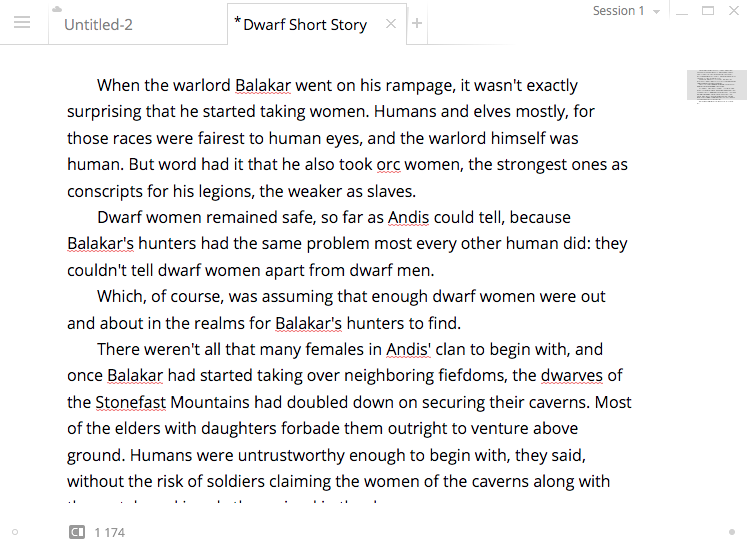
The Write! Window
That little gray square over on the right is a navigation bar, which you can use to get a thumbnail view of where you are in the document, and do a fast scroll up and down. I can confirm, now that I’ve typed enough into the test window to get enough text to scroll, that that does work. I also note that if you don’t happen to like that feature, you can turn it off. (More on this in the next post.)
And OH HEY SURPRISE: down in the left bottom corner, that “1 174” down there? Turns out that’s a word count feature that has no access on the menu whatsoever, so I stumbled across that entirely by accident. More on this in another post, too; I like some of what I see there, but some of it seems buggy as well. The lack of an obvious word count was one of the things I was going to say I didn’t like about the program, but since there is in fact word count functionality here, that’s a distinct advantage over, say, TextEdit.
For now, though, that’s enough for this post. More to come in part 3!
This week I got email from a gentleman telling me he’s a community manager for a piece of software called Write!, which he talked up to me as a distraction-free text editor. He said he was looking for writers and/or bloggers to review the program or at least mention it on their websites, and offered a free license to try the program out.
Now, as y’all know I’m a big fan of Scrivener, which will continue to be my go-to tool for dealing with larger projects. On the other hand, if I want to write something short (say, the extremely rare short story), I sometimes feel that Scrivener’s actually a bit too complex a tool for that. Sometimes I just want to whip something out in a text editor and not have to worry about a lot of bells and whistles.
And hey, since the guy was offering a free license, I took him up on the offer. So here’s a post reviewing Write!, possibly the first of a few, just because I’m going to do this right and go over it in depth just to see what I’m dealing with here.
I’m not terribly active on my Pinterest account; most of the activity I have there is my sister forwarding me stuff and asking my opinion on it. (Part of why I’m not more active there is, in fact, that Pinterest has made a lot of its systems frickin’ unusable, and there’s only so much patience I have for that. But that’s a topic for another post.) One of the items she sent me this past weekend was this one.
And, given that I had a reaction to this that I don’t think my sister entirely expected, I thought it might be useful to write out my thoughts in blog form.
Overall, I have an issue with what this screencap implies. Which is to say, not only is it coming across with the theme of “the book version of a story is inherently superior to the movie version of a story”, it’s got a side helping of snarking at the fans of the movie version. My sister didn’t parse it that way, but I did, and this is why: because in each of the shown examples, the book fan is responding to the movie fan by asking if they like a character who only appears in the books.
And if the movie fan hasn’t read the books, they have no possible way to answer that question.
Now, if you assume that the hypothetical book fan and the hypothetical movie fan have not specified which version of the story they’re talking about, then okay, I’m fine with the conversations as portrayed. But the way they came across to me, particularly given the “see, this is why we read the books as well as watch the movies” responses in the screencap, is that the assumption is that the book fan knows that the movie fan is talking about the movie(s), and not the book(s).
In which case, if:
- You’re the fan of a book version of a story,
- You see a movie fan exulting that they like the movie version of a story,
- You know they’re talking about the movie version, and
- You ask them what they think of a character who appears only in the books…
…then all due respect, but at least to me, you’re coming across pretty snotty there. And that’s exactly how it read to me in the conversational examples between Movie Fans and Book Fans.
And I have a couple problems with this.
One, as I’ve written before, I highly dislike anything that goes in a direction of “you’re enjoying this thing wrong because you’re not enjoying it the same way I am.” This is true for SF/F vs. romance, Mac vs. PC, Windows vs. Linux, Coke vs. Pepsi, Classic Doctor Who vs. New Doctor Who, or whatever. So I am not on board with giving movie fans shit for preferring the movie version of a story over the book version, particularly if the movie fans haven’t even had a chance to check out the book version yet.
Two, I have issues in general with the automatic assumption that the book version of a story is inherently superior to the movie version.
Okay yeah sure, I get that “the book version is the original and tells the story the way the author intended” as a powerful motivator here. I mean, yo, I’m a devoted reader and a writer, so believe me, I get that. Books are powerful. Books are personal, and a good book makes you develop a strong bond to it.
I also get that movie/TV adaptations of a beloved book or book series can often suck. Ursula K. LeGuin comes to mind here, as to date, I am aware of at least two lackluster attempts to do something with the Earthsea books. And certainly, a lot of folks swear up and down that they hate the Hobbit movies, and would therefore use them as an example of this too.
(I am not one of those people; as I’ve said before, while I find the Hobbit movies flawed in certain critical respects, I will forgive them a lot of sins just on the grounds that they made the dwarves living, breathing characters and gave them a culture, which the book just does not do. And I say that as a diehard, lifelong Tolkien fan. But, I digress!)
But to automatically dismiss any movie version of a story as inferior to the book(s) is rather unfair to the movies. I’ve said it before and I’ll say it again: it’s vital to keep in mind that what works on the page may not work on the screen. There are different creative choices that have to be made for the movie version of a story than for the book. To go back to Tolkien, but this time with The Lord of the Rings, there are certain choices the movies make that I infinitely prefer over the books. Though for me, the LotR movies stand shoulder to shoulder with the books for how much enjoyment I get out of them.
And to use an example in the screenshot I’m linking off to, there are definitely movie versions of stories that I prefer over the books. Multiple Harry Potter books fall into this category. The movie version of Prisoner of Azkaban is excellent, and Order of the Phoenix is more fun to me in movie form than it is in book form. In no small part, this is due to my relative lack of patience for emo teenaged Harry in the later books–there’s only so much of his emoting in all caps I can deal with!
The best movie versions of stories for me, too, have a big thing I can’t get in the books: music. Howard Shore’s masterful score for the Tolkien movies is of course the shining example here, but let’s not forget John Williams being the guy who gave us the main Harry Potter themes, either.
And to pull in another of my big guns for book version vs. movie version–let’s talk Master and Commander, shall we? Even aside from my documented history as a Russell Crowe fangirl, getting to see and hear Jack and Stephen play their instruments together, and to hear the wonderful soundtrack that goes along with the film, is a huge, huge part of why I get more enjoyment out of re-watching the movie than I often do trying to continue through the series–which I still haven’t finished. I love Jack and Stephen as characters immensely, but Patrick O’Brian’s propensity for telling the reader about a dozen different kinds of sails, not so much. ;D
One more example, from a story that’s generally universally snarked on even though a whole helluva lot of people have in fact read it: The DaVinci Code. I’ve read the book and seen the movie, since the latter was an office morale event, so I got to see it for free. And I’ll say straight up that while neither version of the story could legitimately be called good, the film ultimately was more enjoyable to me.
Three, even aside from the relative merits of a book version of a story vs. the movie version, there’s also the question of whether a given fan is even able to enjoy the book version of a story. Maybe that movie fan is dyslexic or sight-impaired, and the book may not exist in a form they’re able to enjoy (e.g., audiobook, e.g., ebook that can be read aloud to them via the right tech). Maybe they only got to see the movies because they aired on their local TV station, or because they got to see them on a school field trip or as part of a morale event for their workplace (both of which I have been fortunate enough to experience during my time), and they don’t yet have enough pocket money to pick up copies of the books. Maybe they don’t live near a good library or good bookstore. Maybe they don’t even know that there is a book version yet.
The overall point here being, there are any number of reasons why a fan of a thing may so far only be a fan of the movie version, and not of the book version. And IMO, this doesn’t mean the movie fan is doing it wrong.
If I’d been involved in any of the conversations in that screencap, this is what I’d have said:
“Ooh, I love them too! How do you know the story, via the movies or via the books? You haven’t read the books yet? Do you want to? LET ME HELP YOU OUT WITH THIS. Go! Go read! And then come back to me so that we may squee about this awesome story together, won’t you?”
Because yeah, life’s too short IMO to be overly concerned with what version a fan is using to engage with a story. Rather, I’ll try to look for how to share fannish joy about the story with another person, no matter how they’ve come to know it.
Because stories, like everything else in the world, need all the joy they can get.
(And hey Becky, if you’re reading this, thank you for giving me an opportunity to think! And to post!)
ETA: Typo correction. Changed ‘pocket movie’ to ‘pocket money’.
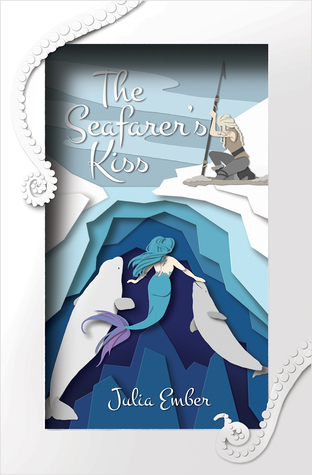
The Seafarer’s Kiss
I went on a bit of an ebook buying binge on Kobo, because every so often I just gotta, y’know?
Here’s what I got:
- The Golem and the Jinni, by Helene Wecker. Fantasy. Grabbed this because it was on sale, and because I’d heard quite a few good things about it when it came out. It seems like an unusual premise and I am here for that!
- It’s a regular C.E. Murphy marathon, because as y’all know, I do love me some Kitbooks. She’s just released an honest-to-god romance novel, Bewitching Benedict, which I nabbed because “historical romance” does fall into the narrow category of “romance I like to read”. But I also went back and got her Roses in Amber, which is her take on Beauty and the Beast, and Take a Chance, her superhero graphic novel.
- Stars of Fortune, by Nora Roberts. Paranormal romance, book 1 of her Guardians trilogy. I don’t quite like Nora’s paranormals (or, “ParaNoras”, as the Smart Bitches site likes to call them) as much as I like her standalone romantic suspense or the J.D. Robbs. But I do occasionally like ’em for potato-chip type reading, and hey, I haven’t read this one yet. Plus, I saw it mentioned on this recent post on the Bitchery, and thought okay yeah sure, that might be some silly fun.
- Acadie, by Dave Hutchinson. SF. Nabbed this newly released novella from Tor.com entirely because of the title, and because I am curious as to how big a parallel it’ll have to Acadian history in real life.
- The Seafarer’s Kiss, by Julia Ember. YA fantasy romance. Nabbed this on the strength of this review on the Bitchery, because if you say the words “f/f retelling of The Little Mermaid wherein the little mermaid falls in love with a Viking shield maiden” to me, the words I’ll be saying in reply are “GET THIS INTO MY LIBRARY STAT”.
- Final Girls, by Mira Grant. Horror. Because “new horror novella by Mira Grant”, you say? Why yes I WILL have some.
- And last but not least, A Study in Scarlet Women, by Sherry Thomas. Mystery. Nabbed this because while I’d already heard about it and had half an eye on it on the strength of buzz about “genderbent Sherlock Holmes”, I finally caught up on a Smart Podcast Trashy Books episode in which the author is interviewed. And I would totally not have guessed by a pen name like “Sherry Thomas” that the author is ethnically Chinese–and when she described how her writing style sometimes incorporates anglicized versions of idioms from Chinese, the language nerd in me just had to see what her style is like. Plus, genderbent Sherlock Holmes. SIGN ME UP.
Alert readers may note that that’s three, count ’em, three different books that are on this list specifically because of the fine ladies at Smart Bitches Trashy Books. They ARE a huge influence on my reading, it’s true! (Duking it out recently a lot with Tor.com, in fact.)
33 titles now for the year.
So when last we left my Quebec trip report, I’d gotten to Montreal and had managed to rendezvous successfully with the other incoming attendees, and with the drivers who were on tap to get us from downtown Montreal to the site of Camp Violon Trad.
This post, I’ll talk about that site and what it was like.
I’m told that Plein Air Lanaudia is not Violon Trad’s original location, and that a few years in, it’d gotten big enough that they moved to where they are now. During my time at the camp, I learned that at least some of the attendees had been there often enough that they did in fact remember the previous location. Which just goes to show you that this camp is so well loved that it has devoted attendees that come back every year–rather like Fiddle Tunes!
Since I have no experience with the previous locale, I can only comment about the current one. And to be sure, what I saw was lovely.
I was assigned to room in the Foyer building, which I can only assume was pronounced French-fashion, and which I certainly tried to say to myself as such for the duration. I shared a room with three other women, and our room had two bunk beds, so I wound up taking one of the top bunks as I was younger and a bit more agile than a couple of the others. Having a top bunk did rather make me feel like I was twelve.
Here’s the backside of the Foyer building, as seen from just in front of the dining hall.

Since the room I was in (room 3) was up on the second floor, this meant I did in fact need to go up and down a lot of stairs during the course of this camp. While carrying a guitar case, my backpack, and often also my fiddle. And of course my luggage, on the way in and out! All of which certainly contributed to my exercise. And I certainly did enjoy just walking around exploring, since this was mostly how I got pics during the camp.
One of my goals wound up being looking at signs on everything and seeing how many of them I could translate. My favorite of these was “poubelle”, which I learned pretty quickly was the word for a trashcan. And you can see the full set of the sign pics here.
You will note that one of those pictures has Jean-Claude in it. This would be because of course I took Jean-Claude to Violon Trad. ;D I mean, how can you start the party if you don’t have a mammoth? Commencez la fête!
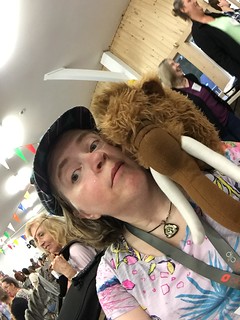
And it was very, very necessary to let him explore the grounds! And also to periodically bring him around to various events and pester at least a couple of the boys of Le Vent du Nord about whether I could get photo ops. All hail Nicolas Boulerice and Simon Beaudry for being good sports. <3
You all can see the full set of Jean-Claude at Violon Trad pics here.
(Side tangent! Note also that a couple of those Jean-Claude pics have a guitar in them. That? That there? That is the guitar of André Brunet, which I note here because André was super, super kind in loaning me his very own guitar so that I wouldn’t have to haul one of mine on a plane all the way to Quebec. I got it from him just before the beginning of classes on the Monday, and in between hauling it around to classes, I spent some time just playing it so I could get acquainted with it.
It was a lovely little guitar, with a good clear voice on it, though perhaps not as muscular and strong a tone as the General–which was kinda fine because this guitar wasn’t a dreadnought, so that was to be expected. And the case had seen quite a bit of usage, which is to be expected for the instrument of a professional touring and teaching musician. This got me amused remarks from Éric Beaudry when I enthused at him about André’s kindness, because of course Éric knows his bandmate’s guitar and case when he sees them.
Let it also be noted for the record that I took a rather inordinate amount of glee in discovering that André had the same kind of strings I use on the General stuffed into the storage box in his case. \0/ Elixir strings FTW!)
But back to the scenery of the place. Overall the layout was this: a central open area with an administration building at the front, and chalets surrounding that space on all sides. Opposite the admin building was the place where the younger attendees were staying. If I were to stand by the admin building and face the youth chalets, the buildings to my left would be the Grand Salle (more on this to come), the buildings where the professors and their families were staying, and the building where I had the guitar classes (more on this to come, too). To the right would be the Foyer building that I stayed in, and past that, the dining hall.
Between the youth chalets and the Foyer building was one access to the lake, which is where the dock and kayaks I took pics of were. There was another access to the lake past the Foyer building, next to the dining hall.
In the opposite direction, towards the building where I had the guitar classes, was the bridge I ventured over and which led to the hockey court, the equipment shed, and the Hebertisme sign. It was over in that direction that I spotted the zipline, too.
I quite enjoyed walking around the grounds, despite the fact that I was massively swarmed with mosquitos. Pro tip for my fellow Cascadians: if you go to a fiddle camp in Quebec, for the love of all that’s holy, do not forget the bug spray. Introvert Anna, who was shy about throwing herself headlong into evening activities yet didn’t want to hide in her room, thought it would be a good idea to hang out outside on Tuesday night practicing on André’s guitar. Only I forgot the bug spray, and boy howdy did the mosquitos find me tasty. (There was much complaining about this on Facebook, oh my yes.)
But aside from the Jean-Claude pics, I think I most enjoyed taking the shots of the lake. Like this one.

All of the scenery shots are tagged on flickr here.
What else? I didn’t do any of the possible camp-type activities that were available–like the kayaks or the zip line or the hockey equipment. But I did do a lot of walking around just to see the place and because I am an active walker. I think if I get to come back to this camp again, I’ll totally want to explore the Hébertisme arch and whatever that mysterious pathway was!
I also didn’t get a chance to explore St-Côme at all, about which I was a little bit sad. But it was too far away to get to on foot, and I had no particular reason to pester the nice gentleman Luc who’d given me a ride in to take me back over there, even though he did offer. (I did pester him to let me check his car when I misplaced my sunglasses, though.) I would rather like a closer look at St-Côme!
Weather-wise we kept alternating between quite nice and sunny, and ALL THE RAIN IN QUEBEC. It was a good thing I’d come with layers to wear!
And that’s about everything I can think of to say about the scenery of the place. Next post, I’ll talk about the actual camp activities, and the actual camp classes! Stay tuned!
The one major thing I was sad about re: our trip to Quebec–other than the saga of Dara’s lost luggage, and I’ll get to that–was that I got to spend only a few hours in Montreal. And that was only because the travel plans meant I had a bit of buffer time between when I arrived at the hotel, and when I needed to rendezvous with the shuttle going to Camp Violon Trad.
Because, fortunately, there was in fact going to be a shuttle. The camp’s staffer in charge of communicating with campers, when she sent out a notice in June telling us what to expect, mentioned that they’d be running a shuttle from downtown Montreal up to where Camp Violon Trad actually happens. I was quite happy about this news, because this meant I didn’t have to try to rent a car and navigate my way northward through a French-speaking province.
(Note that the street signs at this point probably wouldn’t have given me a problem. I’m good enough with reading French at this point that I can figure out roughly where I am, if I need to. The tricky parts would just be not being familiar with any specific traffic laws in Quebec. Or if I had to pull over for directions, or got pulled over by a cop or something–because then I’d have to try to communicate and my conversational French is not up to speed yet. But that was also part of why I wanted to go to Camp Violon Trad. More on this to come, too.)
What amused the hell out of me about the camp shuttle was this: the designated pickup point was right by the Berri-UQAM Metro station. Which, as it turns out, was about the only part of Montreal I knew anything about, because when Dara and I had spent our weekend there in 2012, that very corner was right by the hotel we stayed at, the Lord Berri.
This meant that I also knew that there was an Archambault there, and I knew there were a lot of shops and restaurants and things within immediate walking distance. So, that gave me at least a bit of buffer time, long enough for running errands and having a brunch, between “leaving the hotel” and “rendezvousing with the shuttle”.
Getting out of the hotel
Getting out of the hotel was a bit of a challenge. I knew that in theory there was a bus I could take from the airport to the aforementioned Metro station, and I remembered that on the way in the night before, I’d walked past a kiosk that looked like it had information for the bus in question. But I got a little lost walking around with my luggage through the airport–which, now that it was a much saner morning hour, was a lot busier than when I’d arrived the night before.
Turned out I’d come down onto the wrong floor. I had to backtrack a bit, but ultimately, found that kiosk. And determined that I had to buy a pass that’d cost me ten bucks (Canadian). This struck me as expensive. But on the other hand, it was still significantly cheaper than paying for a taxi.
The bus in question, the 747 (not to be confused with the jet, lol), had a stop not far from the ticket kiosk. So I got out there and soon enough was on my way.
It was awfully bright that morning, so I had my sunglasses on. This impacted my ability to look at things en route, but I did notice that Montreal was undergoing a lot of construction. Rather like Seattle, in that respect.
Once I was off the bus
The bus route was very straightforward: get on the bus at the airport, and get off the bus at its very last stop. So there was no risk of confusion or anything in that regard.
There was a bit of confusion as I was turned around regarding what street I was on once I was off the bus, but that was easily corrected. I found the Archambault (and the Lord Berri right beside it) as landmarks quickly enough. And that let me orient myself on the plan I had for the morning: go to a pharmacy a couple blocks north of the Archambault, then go to the Archambault, then go find something to eat, and finally, rendezvous with the shuttle.
On the way to the pharmacy (and back again, for that matter) I got panhandled in French. Or at least, one active panhandle and one attempt to see if I spoke French, but which I suspected was a panhandle. I was rather amused by that, just because being panhandled in a different language was at least a bit of a switch.
I was also deeply amused by this, which was not something I expected to see in Montreal.
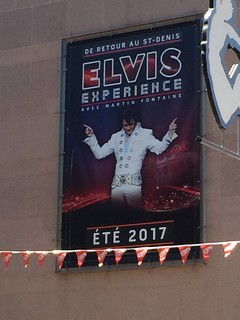
Apparently, at least one Elvis impersonator is a big deal there. Ha!
The Archambault was the major errand I wanted to run (the pharmacy was just for necessities). And what I wanted was Tolkien things in French! I nabbed a French translation of The Silmarillion: this one, to be specific. And I bought the Blu-ray set of The Lord of the Rings movies again, but this time because this set actually had French dubs of all three movies. The US releases we’ve already bought–both the DVDs and the Blu-rays–do not have French dubs, which baffles the hell out of me. Portuguese, yes. French, no. To this day I do not for the life of me understand that particular marketing decision!
I amused the clerk at the counter telling him I wanted to practice my French by doing the reading, and by watching the French dubs of the movies. He tried to warn me that The Silmarillion is not exactly an easy book to follow. I assured him that I had read it repeatedly in English, so yes, I was very, very aware. ;D
I’m pretty sure I provided at least a bit of amusement of my own to passersby on the street, just because I was dragging my suitcase around behind me, with my backpack on top of it so I wouldn’t have the weight of it on my back. And of course, I also had my fiddle, which was what I was carrying on my back instead, since it was lighter than the backpack. This led to multiple conversations with people about how I was in the middle of a lot of travel and was on my way north for the next leg of my journey.
Finally I did make it to Juliette et Chocolat, which had been recommended to me on Facebook as a good source of brunch. And which, in fact, I was pretty sure I’d remembered going to in 2012. The brunch was in fact excellent. So was the dessert, a thing called “petit pot fleur de sel”, which was all chocolate-mousse-y and salted-caramel-y and gracious that thing was tasty.
Eventually I wandered around as much as I felt I was up for wandering around. Half of me really wanted to go to the Café des chats, one of Montreal’s cat cafes, but it was just a bit too far of a walk when I was hauling luggage around with me. So I finally just parked for a bit at the corner, sat in the shade, and hung out playing Gummy Drop on my iPad; while I was doing that, I had another random conversation with a gent amused by my stack of luggage.
That didn’t kill enough time, so I got up and wandered off again to go into a nearby coffeeshop for a cold beverage and a visit to a ladies’ room. And that accomplished, I came back again and finally found some folks waiting in a little cluster with violin cases and other luggage.
I’d found the Camp Violon Trad crowd!
Waiting for the shuttle
I discovered to my surprise that I was not actually the only person from the extended Seattle-area session crowd. One of the other ladies waiting for the shuttle was another Seattle person. So that was awesome to discover. 😀 Turned out we had a bit of a wait on our hands, once we greeted one another and exchanged names and such. None of us were particularly sure which corner the shuttle would be showing up on, or even what kind of vehicle we were looking for.
It was a good thing for me that there was public municipal wifi available, though, because that let me check my mail–and find an update sent out by the camp coordinator, Ghislaine, warning us that there had been a bit of a mixup as to vehicle rentals, and that there would be two drivers coming, but one was running late. Which ultimately meant that there’d be two cars for about six passengers, so we had to divide up who would ride with which driver.
The driver I rode with was a fellow named Luc. Who, as it turned out, is André Brunet’s cousin! He was very nice, and told me and the other two ladies riding with him that he taught English. The route he chose to take northward was a bit random, since he wanted to avoid the tunnel that runs underneath the St. Lawrence river, which is often very crowded. None of us minded, as it was a pleasant drive. I amused myself practicing reading signs we went past, as well as keeping up with the bilingual conversation going on in the car.
Once we made it to St-Côme, I was able to observe that it is a) tiny, and b) kind of adorable. The same applied to Plein Air Lanaudia, the site of Camp Violon Trad. There was a lovely lake there, a bunch of trees, and assorted chalets that we were all staying in.
But more on this in Part 3 of the trip report!