All Posts By

Angela Korra'ti

Bilingual Lord of the Rings Reread

LotR Reread: The Fellowship of the Ring: Chapter 1: A Long-Expected Party

It is a testament to the power of Peter Jackson’s movies that, when I dig into the very first chapter of The Fellowship of the Ring, I cannot help but imagine how it played out in the movie. The music kicks in in my head, and of course, there are the beautiful visuals involved with Gandalf’s fireworks. Although the movie didn’t lay everything out exactly as the book did–and, see my previous post for why I don’t consider that a problem–it’s still very close to it in spirit.

Because yeah. After the Prologue reminds us of what went down in The Hobbit, this chapter also blatantly ties into those events. The very title of the chapter is a callback. And the first few paragraphs tell us about the reputation Bilbo’s had in the Shire ever since his adventure. Right out of the gate, though, we get something that the movie had not really called out: i.e., that the grand party Bilbo’s throwing is in fact a celebration of his birthday and Frodo’s. Bilbo is turning 111, but Frodo is turning 33, the year a hobbit is considered to come of age.

(And that little tidbit, combined with how Frodo doesn’t actually set out on his adventure until he’s pushing fifty, has contributed to why I’ve never really fretted much about heading into my forties and closing in on fifty myself. By hobbit standards, I’m barely adult! Never mind elf standards!)

It’s kind of hysterical, too, that hobbits call the twenties tweens, since that term means something different to a modern eye: i.e., a pre-teen. But then, it’s kind of the same idea, since the hobbits are still giving the word the connotation of “this is somebody too young and irresponsible to be a grownup”.

It’s fun to see the Gaffer on camera, since we don’t get to see him in the movies, and the conversation he has with other hobbits is a nice way to cover the community gossip about the Bagginses, as well as a bit of Frodo’s backstory (the drowning of his parents) and the ill repute of the Sackville-Bagginses. And I do have to giggle at the miller’s assertion that, quote, “Bag End’s a queer place, and its folk are queerer,” unquote.

(Insert obligatory mental picture of a rainbow flag flying over Bilbo’s door here.)

Something else we don’t see in the movies: a note that the dwarves visit Bilbo. In fact, it’s called out in this chapter that dwarves are in fact on hand for the party, even though they do not actually appear in any of the action! And since I have just recently re-watched the tail end of The Battle of the Five Armies, including Bilbo’s sentimental farewell to the surviving dwarves, I cannot help but wonder which dwarves were the ones that visited him here.

I’m sure Bombur would have been VERY apparent indulging in the party supplies, and I like to think that Bofur would have leapt up to sing and play something for the party attendees. We know from the actual book version of The Hobbit, as well, that many of the dwarves did in fact play instruments. I’m a little sad that Tolkien didn’t think to at least include them more obviously in the merrymaking and music-making here!

Doublechecking the Third Age timeline, it’s at least certain that Balin would not have been among the visiting dwarves–he died in Moria before this party was held. Sniff. But I can totally imagine Balin sharing a companionable table with Bilbo. Is there fan art of that? There should be fan art of that.

I also like that among the party presents being handed out, there’s description of wonderful toys that came from the Lonely Mountain and from Dale, toys that are specifically of dwarf-make. Another reason I’m a little sad that the dwarves don’t actually get to participate more obviously in the action! And according to Bofur’s page on the LotR wiki, he was in fact a toymaker. One therefore presumes a lot of the toys being handed out were his work!

Tolkien’s description of the fireworks is magic all on its own, even if I do rather miss the mischief from movie!Pippin and movie!Merry, stealing fireworks to launch themselves.

It’s interesting to me that Bilbo’s speech is given in italics rather than in quoted dialogue lines. I didn’t remember this, and I’m wondering if it was because Tolkien intended to have the speech be more from the point of view of the party attendees in general, rather than Bilbo himself.

And in the middle of the speech, we get more references to shinies from Dale: the crackers that contain musical instruments, “small, but of perfect make and enchanting tones.” I must wonder how small! Pretty tiny, if they were in crackers meant to be pulled apart, and yet they couldn’t have been too tiny, if hobbit-sized hands were still able to get music out of them.

Gandalf is shown here to be in active collusion with Bilbo, another thing that wasn’t quite as apparent in the movie–since here, Gandalf throws in a bit of a magical “boom” to obscure Bilbo disappearing before their eyes. Which leads nicely into Bilbo’s conversation with Gandalf, which is of course one of my other favorite things about the very beginning of this story. “Two eyes, as often as I can spare them,” indeed. Yep, I won’t ever be able to read a word of Gandalf’s without hearing Sir Ian in my head, and this is entirely as it should be. <3

I do love Bilbo’s parting gifts for a lot of different hobbits, and the snarky subtext on the labels. Which I am totally reading in Martin Freeman’s voice, which is also entirely as it should be. And we see yet more of the Sackville-Bagginses, being generally odious, as well as a passle of other hobbits that need to be bodily thrown out of Bag-End after the party is over.

And, of course, we get Gandalf’s final word of warning to Frodo about the Ring–less urgent than it plays out in the film, but still, enough here to leave a frisson of worry. Something’s off about that ring, and Gandalf urges our little hero to keep it secret, and keep it safe.

Raise your hand if you’re now hearing the Ring theme playing in the back of your head.
Advice on Self-Publishing

Advice on self-publishing, Part 7: Printing your book

This is part 7 of my Advice on Self-Publishing series! Previous posts in this series include:

Part 1: Write the book | Part 2: Beta reading and editing | Part 3: Turning your manuscript into an ebook | Part 4: Cover art | Part 5: Deploying the book for sale | Part 6: Sites that format and sell your ebooks

This post will focus on what to do if you want to get your book into print.

Continue Reading

Trilingual Harry Potter Reread

Trilingual Harry Potter Reread: Book 1, Chapter 6: The Journey from Platform Nine-and-Three-Quarters

Chapter 6 of Harry Potter and the Philosopher’s Stone is, for my money, where things finally start getting interesting. We’ve had a lot of exposition thrown at us in the first five chapters of this story, mostly courtesy of Hagrid, who gives Harry his intro to the world.

But in Chapter 6, when Harry is finally on his way to Hogwarts, we get introduced to Ron and Hermione. Accordingly, we get the very beginnings of the friendship that is the foundation of the entire series.

Continue Reading

Boosting the Signal

Boosting the Signal: A Rational Arrangement, by L. Rowyn

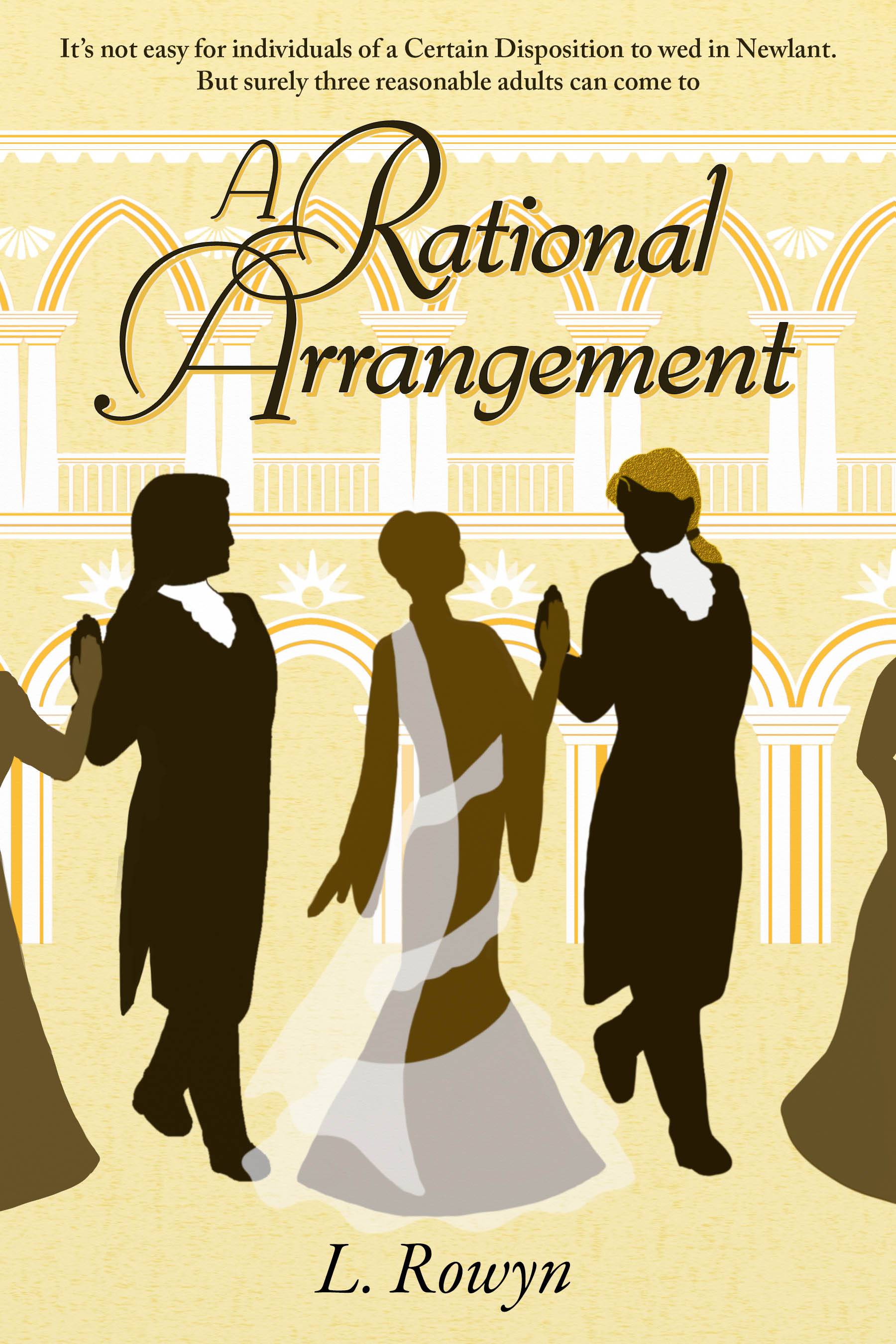
L. Rowyn’s A Rational Arrangement came to my attention because a long-time online pal of mine actually did the layout and design for the book–and if that weren’t enough, the genre description of “polyamorous fantasy romance” ALSO seized my attention. So I reached out to the author to invite her to send me a piece about her book, and today, I’m pleased to feature that piece. Rowyn reports, re: her character goal: “I opted to elaborate on an aspect of one of my protagonist’s goals that I’d never explicitly addressed in the novel. Wisteria’s society assumes that all women want children, so few would bother to question her when she says she does. But her brother is curious.” So here it is, y’all, enjoy!

web-page-separator

A Rational Arrangement

A Rational Arrangement

“Why do you want to get married, anyway?” Byron asked.

Wisteria looked up from the pages of dossiers and notes on suitable possible matches spread across her desk. “Good morning, Byron.”

“I understand why you don’t want to live with Mother and Father, given all the grief they give you. But a husband’s liable to give you as much grief. If not more. Trading the devil you know for a different one.” Her brother lounged against one of the stately bookcases of her office. Byron looked like her: tall and rangy, with a long face and dark wavy hair, his golden-brown skin a shade or two darker than her own.

She leaned against the high back of her chair. “I need a husband in order to have children.” Wisteria paused, then added, “Granted, I do not technically need a husband for that. But it would work rather better with one, I daresay.”

Byron made a face at her, exaggerated enough for her to notice. “So why do you want children, then?”

“Isn’t that normal? I thought this was one area where my thoughts were perfectly ordinary and in keeping with convention.”

Her brother grunted. “Maybe. But you don’t do anything just because everyone else does it. You’ve a reason. A whole pack of reasons.”

Amused, Wisteria conceded the point with a nod. “I like children. Do you remember how sweet David and Mitchell were when they were little?”

“What, our little brothers? Sweet? Are you talking about a different set of boys?”

“Yes, our little brothers. They’re at an awkward age now, true, but when they were small, they’d spend hours sitting in my lap and listening to me read. The same stories, over and over again. They were marvelously easy to please: all one needed to do was pay attention to them and they were all appreciation.”

“You and I have vastly different definitions of ‘easy to please’, Teeri.”

“Perhaps. But I enjoy the honesty of children, too. They say what they think instead of following the arcane rules of the guessing-games adults play at and that I don’t understand. It’s more than about appreciating children, though. People are fascinating: the most interesting, lively, pleasing and entrancing parts of Paradise are the people in it and the things they have made and shaped. I love people. The thought that I, with the assistance of a husband, can actually make a person is nothing sort of miraculous.”

Byron folded his arms over his chest. “Anyone can have a child. World’s full of them.”

“Being work that anyone can do does not make it less valuable, or less miraculous. Besides, whatever future children I might have will be unique individuals. Whether they turn out to be cruel or kind, indifferent or caring, easy-going or belligerent, it is sure that no one else in Paradise will be quite like them. My children are people that only I can make, just as our parents are the only people who could have made us. It is the most basic truth of life, and yet the most amazing one. How improbable, how unlikely we all are! And yet here we are.”

Byron stepped forward to lean against her desk, spinning one of the folders about to look at the documents inside. “But you can do so much more than just breed, Teeri. Things no one else can do. You’ve an eye for evaluating risks, analyzing deals, better than anyone else I’ve seen.”

“I do not plan to stop doing those things,” Wisteria said. “More slowly, perhaps. I do enjoy my work at Vasilver Trading, but it’s not the only thing I want to do with my life. And bearing and raising my children is also something only I can do. People are not like a bolt of ivysilk or a wintertater. Children are not interchangeable. No one else can do this for me. And I want to do it.”

Byron grunted again. “Guess that’s a pretty good reason.”

“Thank you, Byron. I am glad you approve.” She reclaimed the folder from his hand.

“Sorry. Didn’t mean to imply you needed my permission.”

Wisteria patted his arm. “I know,” she said, and returned to her research.

web-page-separator

Buy the Book: Amazon | Kobo | Nook | iBooks | Createspace

Follow the Author On: A Rational Arrangement’s Site | L. Rowyn’s Blog | Twitter

Bilingual Lord of the Rings Reread

LotR Reread: The Fellowship of the Ring: Prologue: Concerning Hobbits

So I’ve started re-reading The Lord of the Rings. I’m not going to do a multi-lingual read of it, not quite yet–mostly because I’m still doing Harry Potter and I’m not going to do two multi-lingual rereads at once. But I think I will document thoughts as I have them. Mostly because I always did love the LoTR reread posts on Tor.com, and because as y’all know, I am a massive Tolkien geek. And my thoughts on Tolkien, they are plentiful!

And I’ve got quite a few thoughts right out of the gate, already. For purposes of this read, I’m using a single-volume ebook edition–basically, the ebook release of the single-volume print edition I have. Because that thing is a great big honking brick of a book, far too large for me to comfortably carry on my regular work commutes. It’s therefore much more amenable to me to do this read-through in electronic form.

Also notably, for anyone who might be considering grabbing digital versions of the trilogy: buying the single-volume ebook edition is significantly cheaper than buying the three individual ebooks. On Kobo’s site, that amounted to paying sixteen bucks for the single omnibus edition, vs. paying twelve each for Fellowship, Two Towers, and Return of the King. I normally don’t care for omnibus ebooks, and would in fact prefer to have the individual books as separate files. But in this case, the price difference was significant enough that it actually mattered.

And now, into the prologue itself. Right out of the gate, my first thought is: wow, modern authors would have this prologue totally shot down by their editors. I say this as an author who in fact had the original prologue for what later became Valor of the Healer shot down (and which interested parties can read here)–a prologue which in fact was a pretty decent amount of action, as opposed to what Tolkien gives us here. I.e., a ginormous infodump of the history of the hobbits, and a recap of how Bilbo got the Ring.

If you’re the sort of reader who expects instant action in the very first paragraph, you won’t like this prologue. But for me, as a lifelong Tolkien geek, it starts setting the stage by introducing us to the hobbits and stressing the importance of the Ring.

Modern writers would, I feel, be encouraged to work this data into the actual flow of the action, seamlessly. There’s a strong argument to be made for that, since certainly, modern tastes slant away from hitting your readers in the face with an infodump first thing. Which is in fact the important point here. There’s a difference between hitting your readers in the face with your infodump, and presenting it to them in such a way that it feels like a natural way to set the stage. For me, Tolkien pulls this off. It’d take a writer in solid command of his or her craft to do something similar in today’s publishing environment, and achieving that level of mastery is not easy. So I can’t exactly fault modern editors from encouraging their writers to not do this.

All that said, there’s such a wealth of detail here that as long as you know what to expect, it’s still delightful. I’d forgotten the description of the original three strains of Hobbits, and how they migrated into what eventually became the Shire. I’d also forgotten that they were in fact the inventors of smoking pipeweed, and that Merry’s on record as documenting a lot of that.

But what really just made me LOL as I re-read this prologue is this description of the discrepancy between the original release of The Hobbit, and later editions that Tolkien retconned to tie in better to The Lord of the Rings:

Now it is a curious fact that this is not the story as Bilbo first told it to his companions. […] This account Bilbo set down in his memoirs, and he seems never to have altered it himself, not even after the Council of Elrond. Evidently it still appeared in the original Red Book, as it did in several of the copies and abstracts. But many copies contain the true account (as an alternative), derived no doubt from notes by Frodo or Samwise, both of whom learned the truth, though they seem to have been unwilling to delete anything actually written by the old hobbit himself.

That, right there, is Tolkien himself handing Peter Jackson, on a silver platter, an in-universe excuse for why the Hobbit movies tell so much more than what the actual book does. Dara and I had decided ages ago that the book was very clearly Bilbo’s version of the story, and that the movies were aiming more for “what actually happened”. But I’d honestly forgotten that Tolkien himself laid this down in his own words.

It’s also highly interesting to me that this prologue calls out how Gandalf was having none of Bilbo’s bullshit in this regard:

Gandalf, however, disbelieved Bilbo’s first story, as soon as he heard it, and he continued to be very curious about the ring. Eventually he got the true tale out of Bilbo after much questioning, which for a while strained their friendship; but the wizard seemed to think the truth important.

Speaking as someone who has just re-watched the end of The Battle of the Five Armies, I think it’s very clear that we see Gandalf not buying Bilbo’s bullshit right there on camera.

If I were to change anything at all about this Prologue, it would be to move the final section, “Note on the Shire Records”, somewhere earlier. The final sentence of the “Of the Finding of the Ring” section is this: “At this point this History begins.”

Which would have been an awesome segue right into Chapter 1. And I think I’ll let that be the segue to my next post!

Bilingual Lord of the Rings Reread

A reread of Lord of the Rings is imminent ebook roundup

The Children of Hurin

The Children of Hurin

Picked up from Kobo recently:

  • Please Do Not Taunt the Octopus, by Mira Grant. Because, well, duh, Mira Grant. This is the latest novella in the Newsflesh universe, and as I have in fact already plowed through it, I can attest that it was delightful. It clues us in on the fate of two particular notable characters following the conclusion of the main trilogy, and it does not disappoint. And there is in fact an octopus.
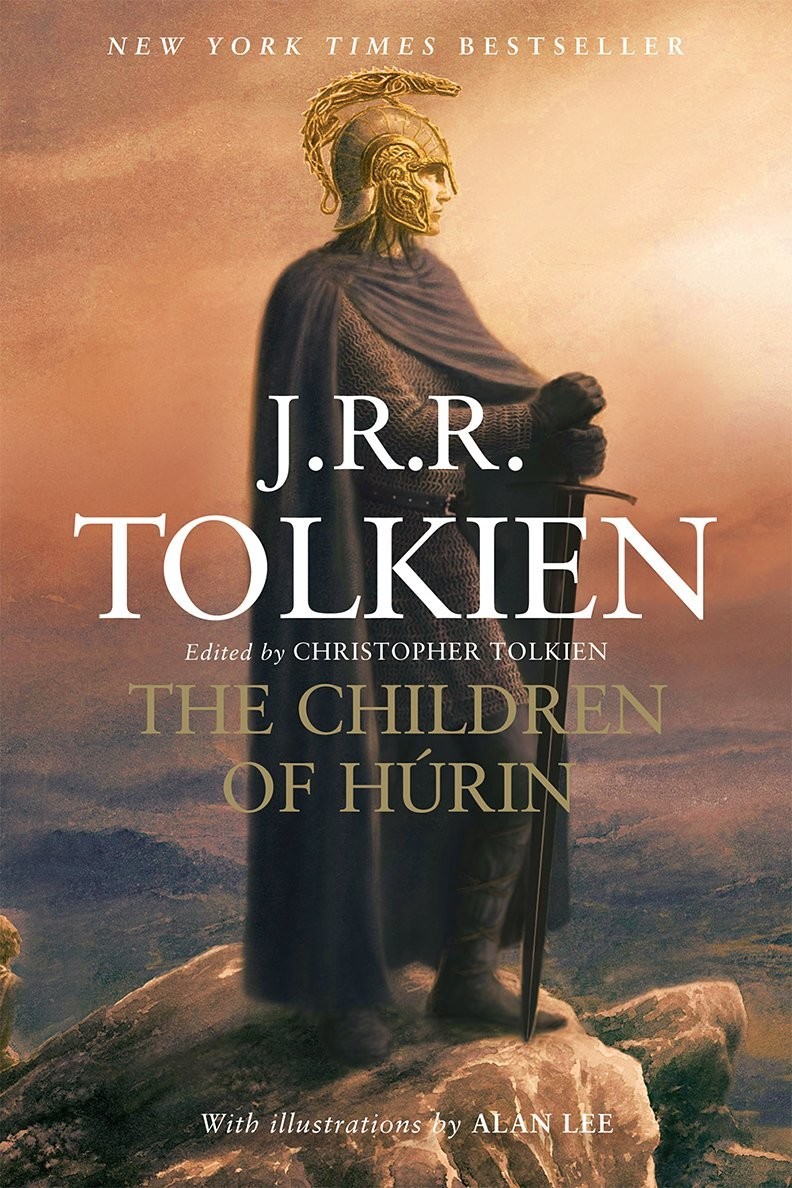
  • The Lord of the Rings, The Children of Húrin, Unfinished Tales of Númenor and Middle-Earth, and The Silmarillion, all of course by J.R.R. Tolkien. Picking all these up in ebook form on the general grounds that I’ve just finally finished re-watching The Hobbit: The Battle of the Five Armies, and it’s kindled in me a MIGHTY NEED to re-read LoTR. And since my print copy of the trilogy is a single-volume huge honking brick of a book, it’s a bit much to carry to work and back with me. So onto the ereaders it goes! And while I’m at it, I snarfed up the others since UNDER NO CIRCUMSTANCES am I taking my beautiful hardback of Children of Hurin out of the house, and my paperback of The Silmarillion is pretty ragged! And I need to re-read Unfinished Tales, too!

This puts me at 45 for the year.

Boosting the Signal

Boosting the Signal: Ether & Elephants, by Cindy Spencer Pape

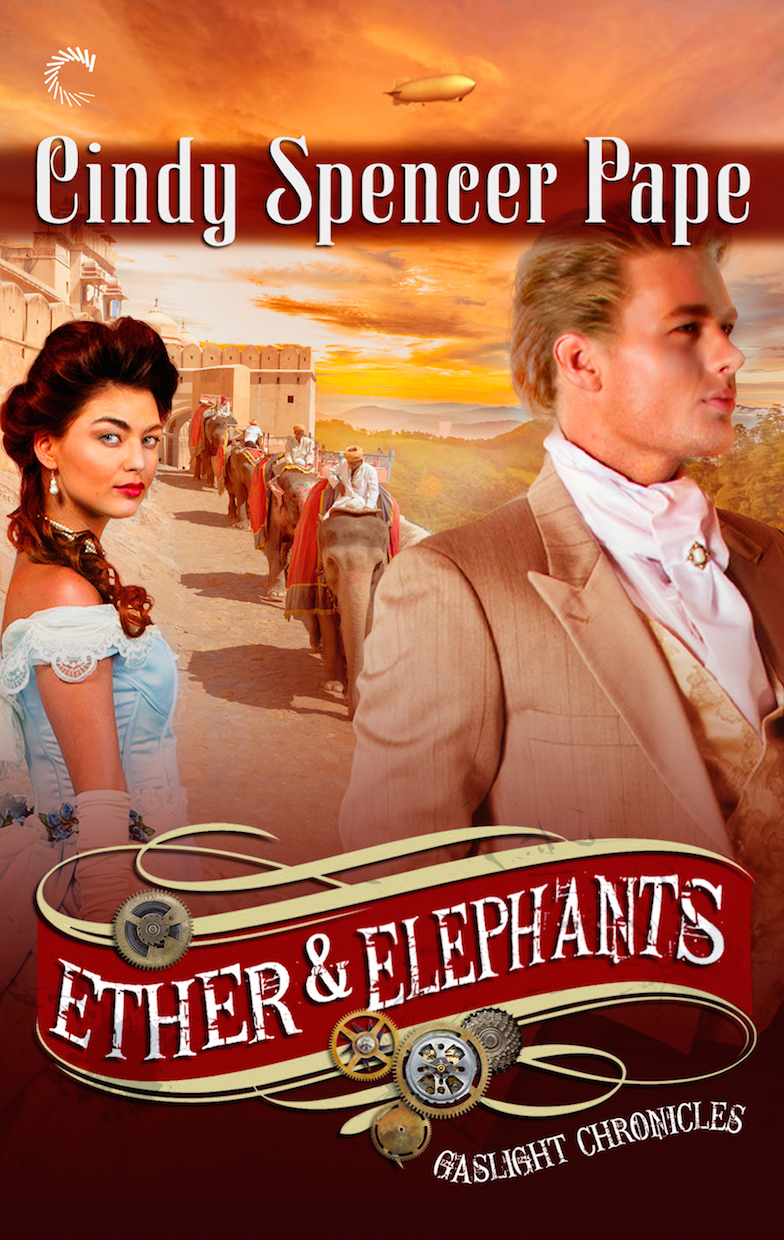
I’ve featured fellow Carina author Cindy Spencer Pape on Boosting the Signal before, with her book Dragons & Dirigibles. I’m thrilled to feature her again today, with the latest installment of the Gaslight Chronicles, Ether & Elephants! And don’t forget–if you like the sound of this book, Carina has a 40% off site-wide sale going on till Monday, so you can get this book as part of that sale! Her character for this piece is Thomas Devere, and his goal is simple: win back the love he’s lost, and become a proper father for the child who’s most likely his son. Take it away, Cindy!

web-page-separator

Ether and Elephants

Ether and Elephants

My life was simple when I was a kid. Pick a few pockets, dodge a few coppers, maybe cheat the occasional sailor in a game of cards. Whatever it took to find a little food and a place to get off the streets at night, since the slums of London were rife with vampyres in those days. I teamed up with some other street rats, we learned to kill the vampyres, we got a permanent room over a tea shop, and life was pretty good. Then when I was fifteen, it all went crazy. We got ourselves adopted by one of the best monster-hunters in England. I found out I wasn’t a bastard at all, but the legitimate heir of a bloody baronet! In just one day we were off the streets of Wapping and into a St. James mansion. Even then, I knew, and my new mum knew, that I was in love with Nell, the younger girl in our crew. So they didn’t legally adopt me. Someday, Nell and I would be married.

That was before I did something so devastatingly stupid that it destroyed everything. In university, for a while, I let my little head do the thinking, and wound up married to a barmaid who claimed I’d gotten her pregnant. Day after the wedding she disappeared, and I never heard from her or the child again. It didn’t matter though. I was married, so Nell and I were doomed. She took a job teaching music to blind children, and I did my best to avoid her as much as possible.

Then, Fate intervened. One of Nell’s students went missing—a boy with supernatural gifts, not unlike my own. As soon as I began to investigate, I knew there was a good chance that young Charlie was my missing son. Finding him and his mother became the sole focus of my life.

Now, we’ve discovered hints that I might not be legally married after all. That Charlie, who may or may not be my son, might be better off if I did have the marriage ruled invalid and simply claimed him as my son, despite the stigma of illegitimacy. His mother appears to be involved with an old enemy of ours—an Alchemist who uses children to test his chemical and magical potions.

So I might be free to marry Nell, but now she wants nothing to do with me. And it looks like we’re heading to India. It’s a three-day airship ride. Her natural father might be waiting on the other end, as we hunt a criminal and a little boy through a foreign land. Anything could happen. Anything at all.

web-page-separator

Buy the Book: Amazon | Audible | Nook | Carina Press | All Romance Ebooks

Follow the Author On: Official Site | Here Be Magic Blog | Romance Books ‘4’ Us Blog | Newsletter Group | Twitter | Facebook